Professional Solution
7 Powerful Benefits of Solar Water Heater Installation in Nepal
⭐
5 Rating
Starting Rs. 4970
Nepal’s abundant sunshine makes it an ideal location for harnessing solar energy, and one of the most practical applications is through solar water heating systems. As electricity costs continue to rise and environmental awareness grows, more households and businesses across Nepal are turning to solar water heater installation as a smart, sustainable solution for their hot water needs.
Installing a solar water heater in Nepal not only reduces your monthly electricity bills but also contributes to a cleaner environment by reducing carbon emissions. With an average of 300 sunny days per year in most parts of Nepal, solar water heaters can efficiently provide hot water throughout the year, even during winter months. Whether you’re a homeowner in Kathmandu Valley or running a commercial establishment in Pokhara, professional solar water heater installation can transform how you access hot water while saving money in the long run.
This comprehensive guide will walk you through everything you need to know about solar water heater installation in Nepal, from understanding how these systems work to choosing the right installation service for your needs.
A solar water heater is a device that uses sunlight to heat water for domestic or commercial use. Unlike electric geysers that consume significant electricity, solar water heaters harness free, renewable solar energy to provide hot water throughout the day and night.
The basic working principle involves three main components: solar collectors, a storage tank, and a circulation system. Solar collectors, mounted on rooftops or open spaces, absorb sunlight and convert it into heat energy. This heat is then transferred to water flowing through the collectors. The heated water rises naturally (in thermosiphon systems) or is pumped (in forced circulation systems) to an insulated storage tank, where it remains hot for use whenever needed.
Modern solar hot water systems are highly efficient, capable of heating water to temperatures between 60°C to 80°C on sunny days. Even on cloudy days, these systems can pre-heat water, reducing the load on backup electric heaters. The beauty of solar geyser installation lies in its simplicity and reliability—with no moving parts in most systems, maintenance requirements are minimal, and the technology has proven its durability over decades of use worldwide.
When considering solar water heater installation in Nepal, understanding the two main types available will help you make an informed decision.
Flat plate collectors feature a flat, rectangular box with a transparent glass or plastic cover on top. Inside, a dark-colored absorber plate with copper or aluminum tubes captures solar radiation. Water flows through these tubes, absorbing heat from the plate.
FPC systems are ideal for Nepal’s climate, particularly in areas with moderate temperatures. They offer excellent performance-to-cost ratio, are durable against hailstorms when properly installed, and require minimal maintenance. These systems work efficiently even when the sun isn’t directly overhead, making them suitable for year-round use in most Nepali cities.
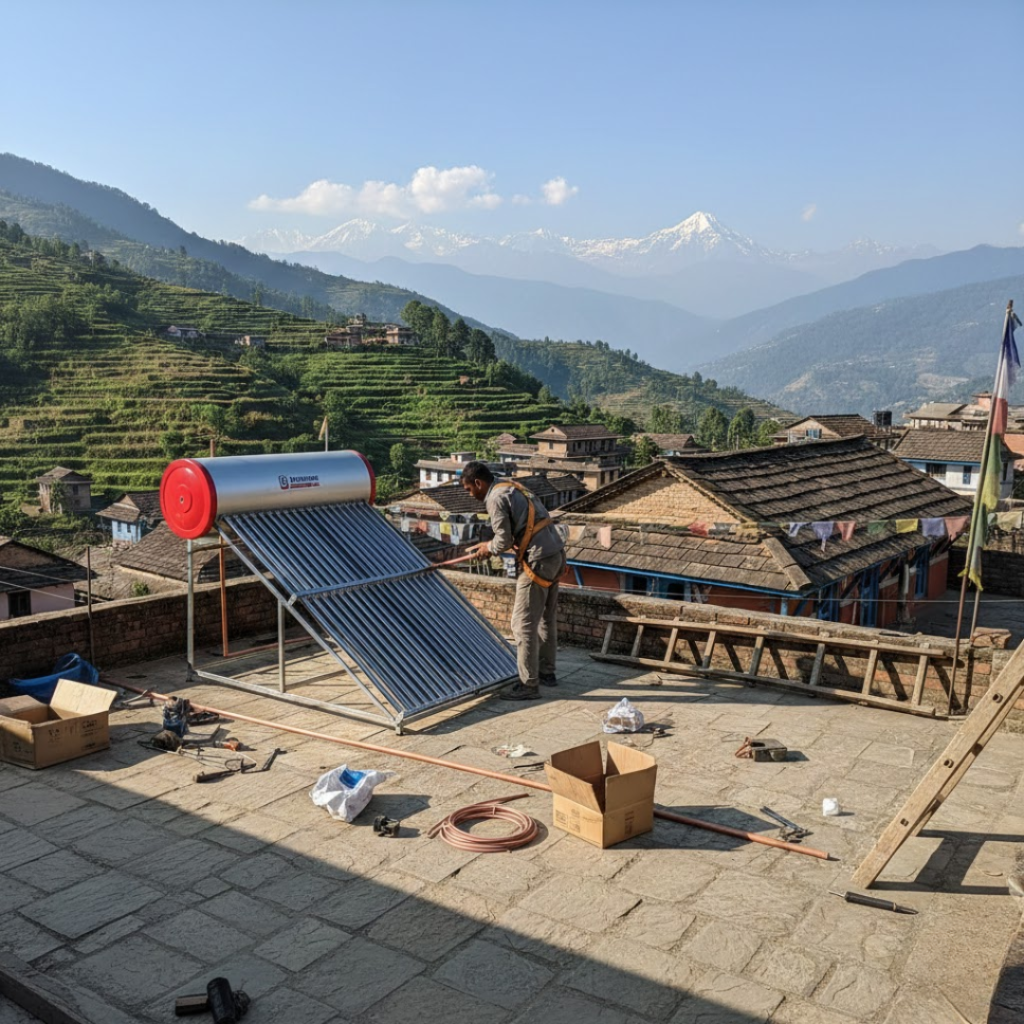
Evacuated tube collectors consist of multiple glass tubes, each containing an inner tube coated with a heat-absorbing material. The space between the inner and outer tubes is evacuated (vacuum-sealed), which dramatically reduces heat loss.
ETC systems are more efficient in cold weather and cloudy conditions, making them particularly suitable for high-altitude areas and regions with harsh winters. They can achieve higher water temperatures compared to flat plate collectors and maintain efficiency even when individual tubes are damaged. This makes ETC the preferred choice for locations like Mustang, Manang, or higher altitude areas of Kathmandu Valley during winter months.
Investing in professional solar water heater installation brings numerous advantages that make it one of the smartest home improvements you can make in Nepal.
The most compelling benefit is the dramatic reduction in electricity bills. An average household using an electric geyser spends approximately Rs. 1,500 to Rs. 3,000 per month on water heating alone. A solar water heater can reduce this cost by 70-90%, resulting in savings of Rs. 18,000 to Rs. 30,000 annually. With proper installation, the system typically pays for itself within 2-4 years, after which you enjoy virtually free hot water for another 15-20 years.
By choosing solar hot water systems, you’re directly contributing to environmental conservation. A typical solar water heater prevents approximately 1.5 to 2 tons of carbon dioxide emissions annually—equivalent to planting 50-70 trees. In a country like Nepal, where hydropower resources are precious and electricity demand is growing, reducing your reliance on electric geysers helps balance the national grid and supports sustainable development.
Quality solar water heaters installed by professionals can last 15-25 years with minimal maintenance. The collectors are built to withstand harsh weather conditions including heavy monsoon rains, intense summer heat, and winter cold. Compare this to electric geysers that typically need replacement every 8-10 years, and the long-term value becomes even more apparent.
Once installed, solar water heaters require very little attention. Annual cleaning of the collectors to remove dust and debris, occasional checking of connections, and a visual inspection of the system is generally sufficient. There are no complex electronic components to malfunction, and most quality systems come with warranties of 5-10 years, giving you peace of mind about your investment.
Several indicators suggest it’s time to consider installing a new solar water heater in your home or business:
You’re currently relying entirely on electric geysers and facing high electricity bills. If your monthly electricity consumption is dominated by water heating, solar installation will provide immediate financial relief.
Your existing solar water heater is over 15 years old and showing signs of reduced efficiency—water not getting as hot as before, visible corrosion on collectors, or leaking pipes. Upgrading to modern technology can restore your hot water supply while improving efficiency.
You’ve recently expanded your household or business operations and need more hot water capacity. Adding or upgrading to a larger solar hot water system is more cost-effective than increasing electric geyser usage.
You’re constructing a new home or commercial building. Incorporating solar geyser installation during construction is easier, more cost-effective, and allows for optimal placement and integration with your plumbing system.
Professional solar water heater installation in Nepal follows a systematic process to ensure optimal performance and longevity:
Site Assessment: Experienced technicians visit your location to evaluate roof structure, available space, sun exposure throughout the day, and proximity to water usage points. This crucial step determines the best collector type, capacity, and placement.
System Design: Based on your hot water requirements, family size, and usage patterns, experts design a customized system. For an average family of 4-5 members in Nepal, a 200-250 liter capacity system is typically recommended.
Roof Preparation: The installation area is prepared, ensuring the roof structure can support the system’s weight (typically 150-300 kg when filled). Proper mounting frames are installed at the correct angle (usually 30-45 degrees facing south for optimal sun exposure in Nepal).
Collector Installation: Solar collectors are securely mounted on the prepared frames, ensuring they’re level and properly aligned. All connections are weatherproofed to prevent leaks during monsoon season.
Storage Tank Setup: The insulated storage tank is positioned (usually adjacent to or near the collectors) and connected to the collector system. Proper insulation ensures water stays hot for 24-48 hours even without sunshine.
Plumbing Integration: The system is connected to your existing water supply and distribution plumbing. This includes installing inlet and outlet pipes, pressure relief valves, and any necessary backup heating elements.
Testing and Commissioning: The complete system undergoes pressure testing, leak checks, and operational testing to ensure everything functions correctly. Technicians verify water flow, check for proper circulation, and ensure the backup heating element (if included) works properly.
User Training: Finally, homeowners receive training on basic operation, maintenance procedures, and troubleshooting tips to maximize their system’s lifespan.
While some may consider DIY installation to save costs, professional solar water heater installation in Nepal is crucial for several important reasons:
Safety First: Working on rooftops, handling heavy equipment, and dealing with plumbing connections requires expertise. Professionals have the right tools, safety equipment, and insurance to handle installation safely without risking injury or property damage.
Optimal Performance: Expert installers understand the technical nuances—proper collector angle, optimal positioning to avoid shading, correct pipe sizing, and efficient thermal circulation design. These factors significantly impact your system’s performance and efficiency.
Compliance and Warranties: Professional installation ensures compliance with building codes and safety standards. Most importantly, manufacturer warranties are only valid when systems are installed by certified professionals. Attempting DIY installation may void your warranty, leaving you unprotected if components fail.
Quality Assurance: Experienced installers use proper materials, weatherproofing techniques, and secure mounting methods that prevent future problems. They understand Nepal’s unique climate challenges—monsoon rains, seismic considerations, and temperature variations—and install accordingly.
Time and Cost Efficiency: What might take an inexperienced person days of work and multiple trips to hardware stores can be completed by professionals in one day. When you factor in potential mistakes, rework, and the risk of damaging components, professional installation is actually more cost-effective.
After-Sales Support: Reputable best solar water heater service in Kathmandu providers offer ongoing support, maintenance services, and quick response to any issues that may arise.
Even well-installed systems may occasionally experience issues. Understanding common problems and professional solutions helps you recognize when to call for solar heater repair service:
Insufficient Hot Water: This could result from undersized systems, scaling in collectors, or improper circulation. Experts diagnose the root cause—whether it’s cleaning collectors, descaling pipes, adjusting the circulation pump, or upgrading to a larger capacity system.
Leaking Pipes or Tanks: Temperature fluctuations cause expansion and contraction, which can stress connections over time. Professional technicians identify leak sources, replace worn gaskets or pipes, and apply proper weatherproofing to prevent recurrence.
Collector Damage: Hailstorms or falling debris can crack collector glass. Specialists can replace damaged components while maintaining system integrity. For evacuated tube systems, individual tubes can be replaced without affecting the entire system.
Reduced Efficiency Over Time: Dust accumulation, internal scaling, or degraded insulation reduces performance. Professional maintenance includes thorough cleaning, descaling treatments, and insulation inspection to restore optimal efficiency.
Backup Heater Malfunction: If your system includes an electric backup heater, electrical issues may arise. Licensed technicians can safely diagnose and repair electrical components, ensuring safe operation.
Air Lock Issues: Air trapped in pipes prevents proper water circulation. Experts have techniques to purge air from the system and ensure smooth thermosiphon flow.
Regular professional maintenance can prevent most of these issues, extending your system’s lifespan and maintaining peak performance throughout the years.
We provide comprehensive solar water heater installation service across Nepal’s major urban centers and surrounding regions:
Kathmandu District: All areas including Maharajgunj, Balaju, Baneshwor, Koteshwor, Chabahil, New Baneshwor, Kalimati, and surrounding neighborhoods receive full installation and maintenance support.
Lalitpur District: Complete coverage in Patan, Jawalakhel, Kupondole, Sanepa, Jhamsikhel, Pulchowk, and all other areas of Lalitpur municipality.
Bhaktapur District: Professional service throughout Bhaktapur city, Thimi, Madhyapur, and surrounding communities.
Extended Valley Coverage: We also serve Kirtipur, Budhanilkantha, Tokha, Sankhu, and other peripheral areas of Kathmandu Valley.
Major Cities: Our services extend to Pokhara, Chitwan, Butwal, Biratnagar, and other major urban centers across Nepal. Contact us to confirm service availability in your specific location.
Our mobile service teams are equipped to handle installations in areas with challenging access, ensuring even hillside homes and remote locations can benefit from solar hot water systems.
Understanding the investment required for solar water heater installation helps you budget appropriately and evaluate different options. Prices in Nepal vary based on system type, capacity, brand, and installation complexity.
Flat Plate Collector Systems: For residential use, expect to invest Rs. 35,000 to Rs. 75,000 for a complete system including installation. A typical 200-liter FPC system for a family of 4-5 costs approximately Rs. 45,000 to Rs. 55,000, while larger 300-liter systems range from Rs. 60,000 to Rs. 75,000.
Evacuated Tube Collector Systems: These generally cost 15-25% more than FPC systems due to advanced technology. A 200-liter ETC system typically ranges from Rs. 50,000 to Rs. 80,000, while 300-liter capacity systems cost Rs. 70,000 to Rs. 95,000.
Factors Affecting Cost: Several variables influence the final price, including brand reputation and warranty terms, tank capacity and insulation quality, collector size and efficiency rating, backup electric heater integration, installation complexity and roof accessibility, and additional components like booster pumps for multi-story buildings.
Return on Investment: While the upfront cost may seem significant, remember you’re essentially pre-paying for 15-20 years of hot water. With average annual savings of Rs. 20,000-30,000 on electricity bills, the system pays for itself in 2-4 years. After that, you enjoy free hot water for another 12-18 years—a remarkable return on investment.
Financing Options: Many suppliers offer installment payment plans, making solar geyser installation more accessible. Some banks in Nepal provide green energy loans with favorable interest rates for solar installations. Check with providers about available financing options.
Selecting the right installation partner is crucial for long-term satisfaction with your solar hot water system. Here’s what sets our service apart:
Certified and Experienced Technicians: Our installation team comprises trained professionals with years of experience specifically in Nepal’s unique conditions. They understand local climate challenges, building styles, and customer needs.
Quality Products: We partner with reputable manufacturers offering proven reliability and comprehensive warranties. Every system we install meets international quality standards while being optimized for Nepali conditions.
Comprehensive Service: From initial consultation and site assessment through installation, testing, and after-sales support, we provide end-to-end service. Our relationship with customers doesn’t end at installation—we’re here for maintenance, repairs, and upgrades whenever needed.
Transparent Pricing: No hidden charges or surprise fees. We provide detailed quotations upfront, explaining exactly what’s included in your investment. Our competitive pricing ensures you get excellent value without compromising quality.
Quick Response Time: We understand the importance of hot water in your daily routine. Our service team responds promptly to installation requests and maintenance calls, minimizing any disruption to your comfort.
Customer Satisfaction Focus: Hundreds of satisfied customers across Kathmandu Valley and beyond trust us for their solar water heating needs. Our reputation is built on delivering reliable systems and standing behind our work.
Warranty and Support: We offer comprehensive warranties covering both components and workmanship. Should any issues arise, our responsive support team ensures quick resolution.
Q1: How long does solar water heater installation take?
A: Professional installation of a residential solar hot water system typically takes 4-6 hours for a standard rooftop setup. This includes mounting collectors, installing the storage tank, connecting plumbing, and testing the system. Complex installations involving structural modifications or difficult roof access may take longer. Most homes can begin using their new solar water heater the same day it’s installed.
Q2: Will a solar water heater work during monsoon or winter in Nepal?
A: Yes, solar water heaters continue functioning during cloudy weather and winter, though efficiency is reduced. Modern systems can still pre-heat water even on overcast days, and the insulated storage tanks keep water hot for 24-48 hours. Many systems include electric backup heaters for extended cloudy periods or high-demand situations. In Nepal’s climate with abundant sunshine most of the year, solar water heaters provide reliable hot water in all seasons.
Q3: How much maintenance does a solar water heater require?
A: Solar water heaters are remarkably low-maintenance. Basic care includes cleaning the collector glass 2-3 times yearly to remove dust and debris (especially after monsoon season), visually inspecting connections and pipes annually for leaks or corrosion, and checking the pressure relief valve periodically. Professional maintenance service every 2-3 years ensures optimal performance. Unlike electric geysers, there are no heating elements to replace regularly or complex electronics to fail.
Q4: Can I install a solar water heater in an apartment building?
A: Absolutely! Many apartment buildings in Kathmandu successfully use solar water heating systems. Individual apartment systems can be installed with collector and tank placement on accessible roofs or balconies. Alternatively, centralized systems for entire buildings provide hot water to multiple units, reducing costs through shared installation. Our team has extensive experience designing solutions for apartment complexes, working with building management and residents to create efficient systems.
Q5: What capacity solar water heater do I need for my family?
A: Capacity depends on family size and usage patterns. As a general guideline: 100-150 liters for 2-3 people, 200-250 liters for 4-5 people, 300-350 liters for 6-8 people, and commercial establishments require custom sizing based on specific needs. During our site assessment, we evaluate your actual hot water consumption patterns, number of bathrooms, washing requirements, and usage timing to recommend the ideal capacity that ensures you never run short of hot water.
Q6: Is there any government subsidy for solar water heater installation in Nepal?
A: The government of Nepal has periodically offered subsidies and incentives for renewable energy installations, including solar water heaters, as part of environmental sustainability initiatives. Subsidy programs and amounts vary by year and location. We stay updated on available government schemes and help customers access any applicable subsidies or tax benefits. Contact us for current information about incentives available in your area, as these programs can significantly reduce your upfront investment.
Q7: What happens if the solar water heater gets damaged during hailstorm or earthquake?
A: Quality solar water heaters are designed to withstand Nepal’s weather conditions, including typical hailstorms. The tempered glass used in collectors is impact-resistant, and proper installation ensures structural stability. For evacuated tube systems, individual damaged tubes can be replaced without replacing the entire system. Regarding earthquakes, professional installation with proper mounting and flexible connections minimizes damage risk. Most comprehensive home insurance policies can cover solar water heater systems. Additionally, our installation warranty covers workmanship-related issues, and manufacturer warranties cover component defects.
Installing a solar water heater is more than just a home improvement—it’s an investment in your family’s comfort, your financial future, and Nepal’s environmental sustainability. With professional solar water heater installation in Nepal, you can start enjoying consistent hot water while dramatically reducing electricity bills from day one.
Don’t let another month pass paying unnecessarily high electricity bills for water heating. Our expert team is ready to assess your needs, recommend the perfect system, and complete professional installation that will serve you reliably for decades.
Contact us today for a free consultation and site assessment. Our friendly experts will answer all your questions, provide a detailed quotation with transparent pricing, and schedule installation at your convenience.
Join thousands of satisfied customers across Kathmandu, Lalitpur, Bhaktapur, and beyond who have made the smart switch to solar hot water systems. Experience the best solar water heater service in Kathmandu and start your journey toward energy independence.
Call us now or visit our website to book your solar water heater installation and begin saving money while helping build a greener Nepal!